
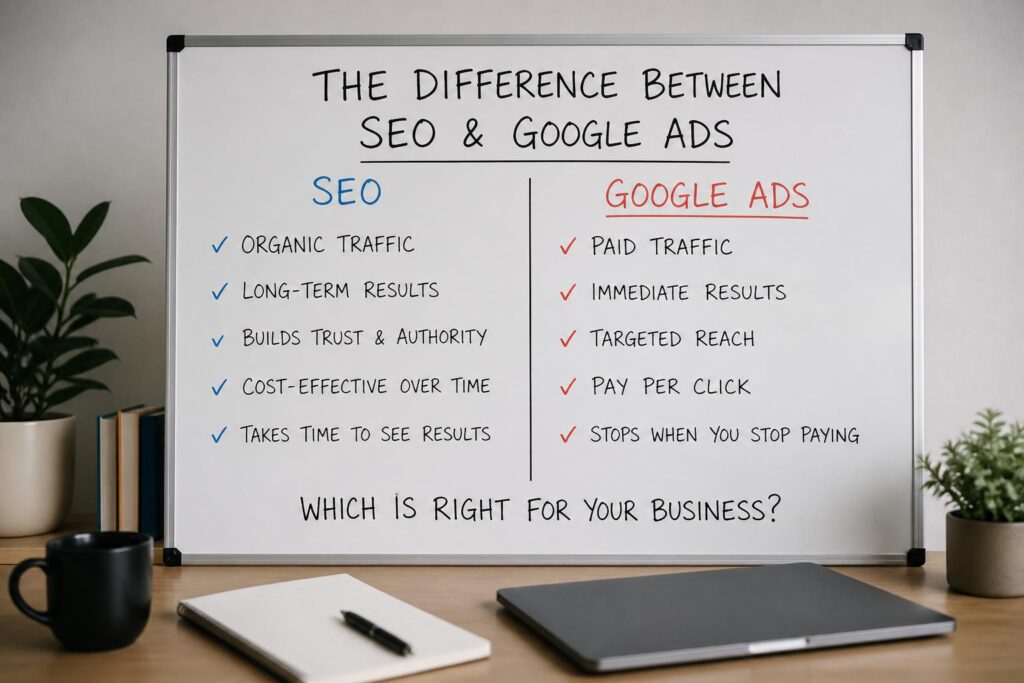
Search engine optimisation earns organic placement on Google over time through content and site improvements, while Google Ads buys immediate visibility at the top of the search results on a pay-per-click model. For a small business in South Africa, SEO builds lasting equity that brings in leads without paying for each click, whereas Google Ads delivers instant traffic the moment a campaign goes live. Choosing between them depends on how fast you need leads, your available budget in Rands, and your long-term growth plan.
Understanding Search Engine Optimisation
Search engine optimisation focuses on improving your website so Google recognises it as the most helpful answer for relevant search queries. When a potential customer in Cape Town or Johannesburg searches for your services, strong organic rankings put your website directly in front of them without incurring ad fees. Partnering with a dedicated team for specialist SEO services ensures your website builds authority, captures regional intent, and maintains solid rankings through algorithm updates.
Earning organic visibility requires consistent effort across several foundational areas:
- On-page optimisation, which aligns your page content, headings, and metadata with what local searchers want.
- Technical site health, including fast page load speeds during load-shedding mobile spikes and proper mobile rendering.
- Local authority signals, such as consistent Google Business Profile details and authentic customer reviews.
- Helpful, authoritative content that answers common customer questions and demonstrates real expertise.
How Google Ads Delivers Immediate Results
Google Ads operates as an auction where businesses bid on specific keywords to show sponsored listings above organic results. You only pay when an interested user clicks your link, making it an effective method for generating sales inquiries right away.
When Paid Search Makes Sense
Paid campaigns shine when you launch a brand-new offering, run seasonal promotions, or need immediate lead flow while building organic rankings. If your business sells urgent services like emergency plumbing, auto recovery, or borehole repairs, sponsored ads place your phone number directly in front of high-intent searchers at the exact moment they need assistance.
Running a successful paid campaign requires attention to several moving parts:
- Selecting high-intent transactional keywords that filter out casual browsers and attract paying clients.
- Setting strict daily spend caps to prevent budget drain while testing conversion rates.
- Creating dedicated landing pages with clear contact details and fast-loading inquiry forms.
- Tracking conversions accurately to ensure every Rand spent generates measurable returns.
Comparing Costs, Speed, and Sustainability
The core distinction between organic search and paid advertising centres on speed, cash flow, and asset creation. Google Ads provides instant gratification: turn the budget on and traffic flows; turn the budget off and inquiries stop immediately. SEO demands patience over several months, but once your pages rank on page one, they continue generating inquiries at zero cost per click.
Evaluating the trade-offs between both channels involves several practical considerations:
- Upfront expenditure: Google Ads requires direct ad spend alongside management fees, while organic search invests primarily in content and technical site enhancements.
- Asset ownership: Organic rankings build long-term digital property value, whereas paid ads only rent temporary attention.
- Trust and click distribution: Many searchers skip past sponsored listings to click top organic results, viewing them as more credible and unbiased.
Building a Balanced Strategy for Growth
Most growing businesses achieve the best results by using both channels in tandem. Paid ads provide immediate sales while your organic foundation gains strength, providing valuable search query data that reveals which keywords convert best in the local market.
Transitioning from Paid to Organic
As organic rankings rise and deliver regular inquiries, you can gradually reduce paid bids on high-cost generic terms and redirect ad spend toward specific high-margin promotions. This combined approach keeps cash flow steady while systematically lowering your average cost per lead over time.
Precision Solutions With Shout Local
Choosing the right digital marketing channel should not involve guesswork or wasted ad spend. Shout Local builds focused search campaigns designed around the specific realities of the South African market. Whether you need immediate client acquisition through paid search or long-term dominance through organic optimisation, our team provides clear, data-backed execution. Reach out to discuss your goals through our contact channels to get a practical assessment for your business.
Frequently Asked Questions
How long does SEO take to produce results for a small business?
Most local businesses see noticeable ranking improvements and inquiry growth within three to six months. Highly competitive sectors or brand-new websites may require six to nine months of consistent optimisation to secure top positions.
Can I run Google Ads without doing SEO?
Yes, you can run paid ads without an organic campaign, but poor landing page quality will increase your cost per click. Google rates your ad relevance partly on how well your destination page answers the search query, so basic on-page optimisation remains necessary.
Which option delivers a better return on investment?
SEO typically delivers a higher long-term return on investment because organic traffic continues flowing without ongoing per-click charges. Google Ads delivers a faster initial return, making it ideal for immediate cash generation.
Should a local service business use SEO or Google Ads first?
If you have an urgent need for leads to sustain operations, start with targeted Google Ads while establishing basic website foundations. If you have stable cash flow and want to reduce customer acquisition costs over the coming year, invest in organic optimisation first.